Of all the questions beginners ask me, "which hook size should I use?" comes up more than almost any other. It seems like it should have a simple answer — just look at the yarn label, right? But when it comes to amigurumi, the label is actually not what you want to follow. Let me explain why, and then give you a clear reference chart you can use for every project.
The Most Important Rule: Go Smaller
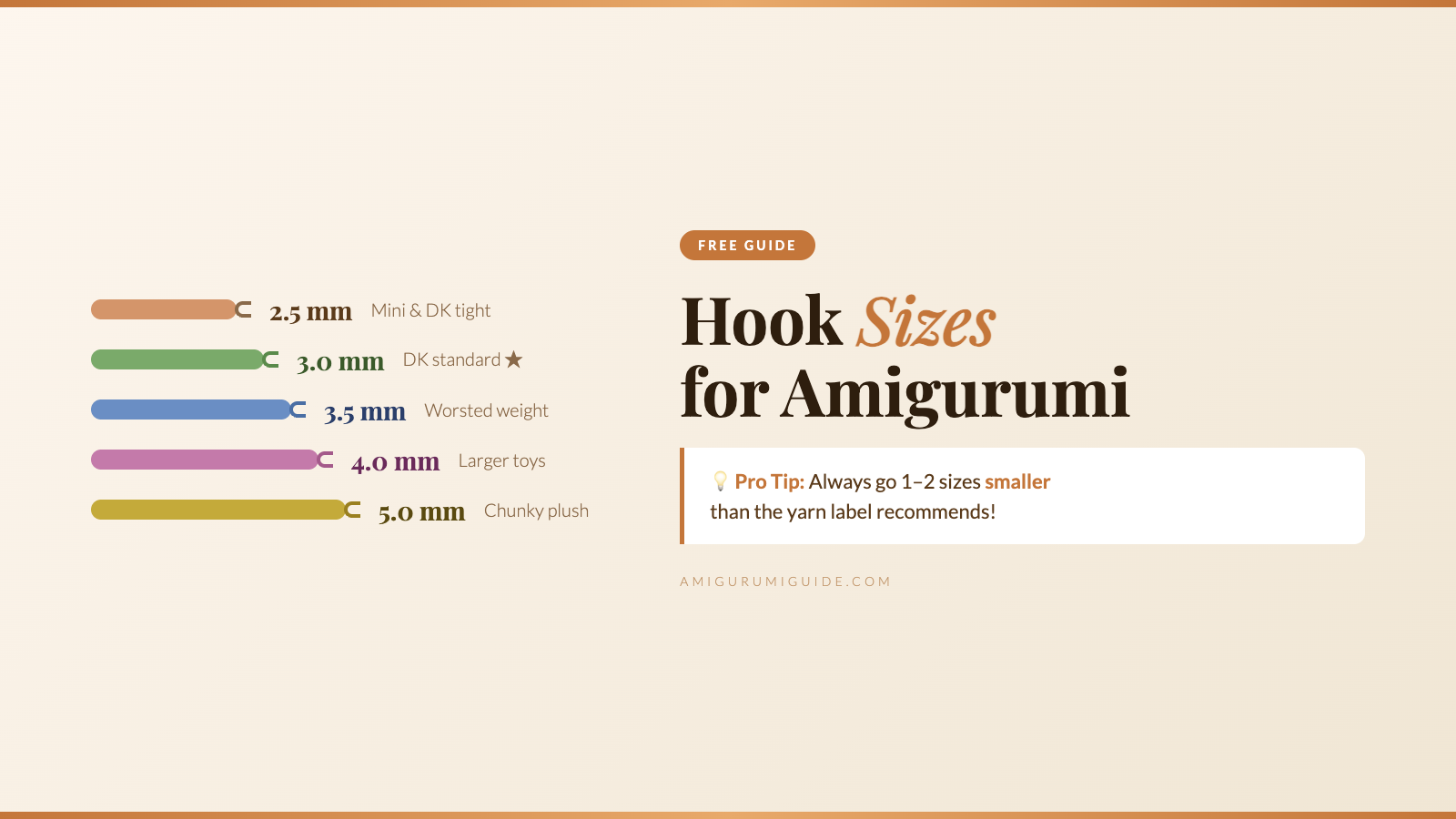
Here's the rule that every amigurumi maker needs to know: use a hook that is one or two sizes smaller than the yarn label recommends.
Yarn labels are designed for knitting or standard crochet — flat items like scarves, blankets, and sweaters. For those projects, a looser, drapey fabric is desirable. But amigurumi is a stuffed toy. If your stitches are loose, the stuffing shows through the gaps and your finished piece looks unpolished and lumpy.
Going down one or two hook sizes creates a tighter, firmer fabric where the stitches lock together. The result is a smooth, neat surface that hides the stuffing completely. Your toy will also hold its shape better over time.
Yes, the tighter fabric is slightly harder to work into — especially at first. Your hook will need to push through a more resistant stitch. Most makers adapt within a few rows and come to prefer the feel. If you find it genuinely painful on your hands, try dropping just one size rather than two, or consider switching to an ergonomic hook handle.
Hook Size Reference Chart
Here is a practical guide to which hook size works best for each yarn weight in amigurumi. Note that the "amigurumi recommended" column is deliberately smaller than the standard recommendation:
| Yarn Weight | Label Suggests | Amigurumi Hook | Best For |
|---|---|---|---|
| Fingering / Sock (1–2) | 2.5–3.5 mm | 1.5–2.5 mm | Mini amigurumi under 8 cm |
| DK / Light Worsted (3) | 3.5–4.5 mm | 2.5–3.0 mm | Standard amigurumi, 10–18 cm |
| Worsted / Aran (4) | 4.5–5.5 mm | 3.5–4.0 mm | Larger toys, 15–25 cm |
| Chunky (5) | 6–8 mm | 4.5–5.0 mm | Big plush toys, 25 cm+ |
The most common combination in amigurumi patterns (including all of mine) is DK yarn + 2.5mm or 3.0mm hook. If a pattern doesn't specify a hook size, start with 2.75mm for DK weight and adjust from there.
How to Check If Your Tension Is Right
Before starting any amigurumi project, crochet a small swatch and do this simple test: hold the fabric up to a light source — a lamp or a bright window. If you can see light passing through the stitches, your tension is too loose. Go down another hook size and try again.
The finished swatch should be opaque and slightly firm. It will feel stiffer than you might expect from a soft toy, but that stiffness disappears after stuffing and becomes a firm, smooth surface.
Which Hook Material Should You Choose?
Once you have the right size, hook material matters more than most beginners realise:
Aluminium / Metal Hooks
The most common type. Smooth surface, consistent sizing, very durable. Yarn slides off easily, which speeds up your work. The only downside is that metal handles can feel cold and tiring during long sessions. My everyday recommendation for amigurumi.
Ergonomic Rubber-Grip Hooks
These have a wide, soft handle that dramatically reduces hand fatigue. Highly recommended if you crochet for more than 30–45 minutes at a time, or if you experience any wrist or hand discomfort. The Clover Amour and Tulip Etimo ranges are popular choices with excellent reviews.
Steel Hooks
Used for very fine yarn weights (fingering, lace, thread). If you're making mini amigurumi under 5cm, you'll likely need steel hooks in the 1.0–2.0mm range. These are sold separately from standard aluminium hooks.
Bamboo or Wood Hooks
These have a slightly "grippier" surface than metal, which slows yarn movement a little. Some makers love this for better stitch control; others find it frustrating. Worth trying if you tend to split stitches with metal hooks.
My Recommended Starter Set
If you're just starting out, you don't need 30 different hooks. Here's what I'd suggest buying first:
- 2.5 mm — covers most DK yarn patterns tightly
- 3.0 mm — great for DK yarn with a slightly more relaxed tension
- 3.5 mm — useful for worsted weight patterns
Get these three in an ergonomic handle style if possible. That's genuinely all you need to complete 90% of beginner and intermediate amigurumi patterns.
Quick Summary
- ✅ Always go 1–2 sizes smaller than the yarn label suggests
- ✅ For DK yarn, start with a 2.5mm or 3.0mm hook
- ✅ Light test: if light passes through, go smaller
- ✅ Ergonomic handles reduce fatigue for longer sessions
- ✅ A starter set of 2.5mm, 3.0mm, and 3.5mm covers most patterns
- ❌ Don't follow the hook size on the yarn label for amigurumi
Ready to try it out? Head to the Complete Beginner's Guide for your first project, or check out the Best Yarn for Amigurumi guide to pair the perfect yarn with your new hook.